Two summers ago, offers on Bozeman homes routinely arrived with inspection and appraisal contingencies already waived. That posture has ended. As of July 2026, the median Bozeman listing is sitting about 43 days before going pending, the median sold price over the trailing six months is $719,570, and mortgage rates in the 6.4 to 6.9 percent range have brought seller-funded buydowns into ordinary listing negotiations. Buyers have time. Buyers are using it.
The number sellers should be watching, though, is not the days-on-market figure. It is three. That is the count of days a Bozeman buyer now has to walk away from a signed contract once the seller's disclosure statement lands in their inbox, and it is the mechanism that turns every routine inspection finding in this market into a scheduling problem.
Under Montana Code § 70-20-504, a residential purchase contract "is not effective" until three days after the buyer receives the seller's disclosure statement, and during that delay the buyer may withdraw or rescind without penalty unless they have waived the right in writing.
That clock, added when the Legislature passed § 70-20-502 in 2023, is the reason a small radon reading, a stained rafter tail, or a missing well line on a disclosure form now behaves so differently than it did in 2021.
The posture change that makes small findings expensive
The gap between how a Bozeman buyer approached an inspection report in 2021 and how one approaches it now is the whole story.
Inspection reality | Bozeman buyer, 2021 | Bozeman buyer, 2026 |
|---|---|---|
Median days on market | Under a week in many segments | Roughly 43 days on active listings, roughly 80 on closed sales |
Inspection contingency | Frequently waived | Retained, and used |
Radon finding above 4 pCi/L | Often absorbed | Priced as a credit or seller-installed mitigation |
Ice-dam evidence in attic | Rolled into "as-is" | Grounds for a moisture and mold specialist call-back |
Missing disclosure line item | Rarely challenged | Triggers the three-day rescission window |
None of these individual findings are new. What is new is that a buyer with 80 days of comparable inventory to consider has no reason to swallow any of them. The seller who understood this in April is closing in July. The seller who did not is watching their listing age past the median.
Radon has moved from specialty add-on to default line item
Gallatin County sits inside EPA Radon Zone 1, meaning the agency's predictive model expects an average indoor screening level above 4.0 pCi/L for homes in the 59715, 59718, and 59773 ZIPs. That prediction is borne out on the ground. The Gallatin City-County Health Department reports that 37 percent of tested Gallatin County homes returned elevated radon levels, and Triple R Mitigation, one of the valley's longest-running mitigation firms, puts the figure at 48 percent across the Gallatin Valley, with documented single-home readings above 145 pCi/L.
The transactional implication is straightforward. The Montana Department of Environmental Quality's guidance is that any test result at or above 4.0 pCi/L should be negotiated as a mitigation ask, and typical sub-slab mitigation in this market runs roughly $800 to $2,000. In a market where the buyer expects to test and the inspector expects to find, the question a listing agent should be asking a seller before the sign goes in the yard is not whether radon will come up. It is whether the seller wants to answer for it once, on paper, before the offer arrives, or three times, in email, after it does.
Pre-listing testing through a certified provider such as Bozeman Radon & Mold, whose NRPP measurement license is on file with the state, converts a probable renegotiation into a disclosable, resolved condition. It also settles the Radon Control Act line inside the § 70-20-502 form, which asks the seller to represent whether the property has been tested and whether mitigation has been performed. A signed system, a fan sticker, and a post-mitigation reading below 4.0 pCi/L is a shorter conversation than a mid-contract renegotiation.
What inspectors read into your eaves after a Bozeman winter
The City of Bozeman's building department publishes a minimum design roof snow load of 30 pounds per square foot after allowed reductions. That number is not trivia. It is the framework local inspectors carry in their heads when they look at attic insulation depth, ice-and-water shield coverage at eaves, ceiling stains along exterior walls, and the condition of shingles at valleys and dormers.
Ice dams form when warm attic air melts snow on the upper roof and the runoff refreezes at the colder eave. Water then backs up under shingles and enters the attic. The damage often does not present for weeks or months, which is why local remediation firms including Bozeman Ice Dam Removal, Dovetail Raingutter, and 406 Roofing recommend post-winter inspections rather than post-first-thaw ones. Paul Davis Restoration's Southwest Montana office reports that ice-dam driven leaks are a leading source of attic and crawlspace mold calls in the Gallatin Valley, and mold triggers a separate disclosure obligation under Montana's Mold Disclosure Act at § 70-16-703.
For a seller listing in late summer or early fall, the practical read is this. A roof that shrugged off the 2025 to 2026 winter without leaks is a roof that still needs the attic photographed and the eaves documented before an inspector does it for you. If there is prior water staining on rafters or insulation, the § 70-20-502 form has a line for it, and the alternative to writing it down is a buyer's inspector writing it up.
Well and septic move from footnote to front page for acreage listings
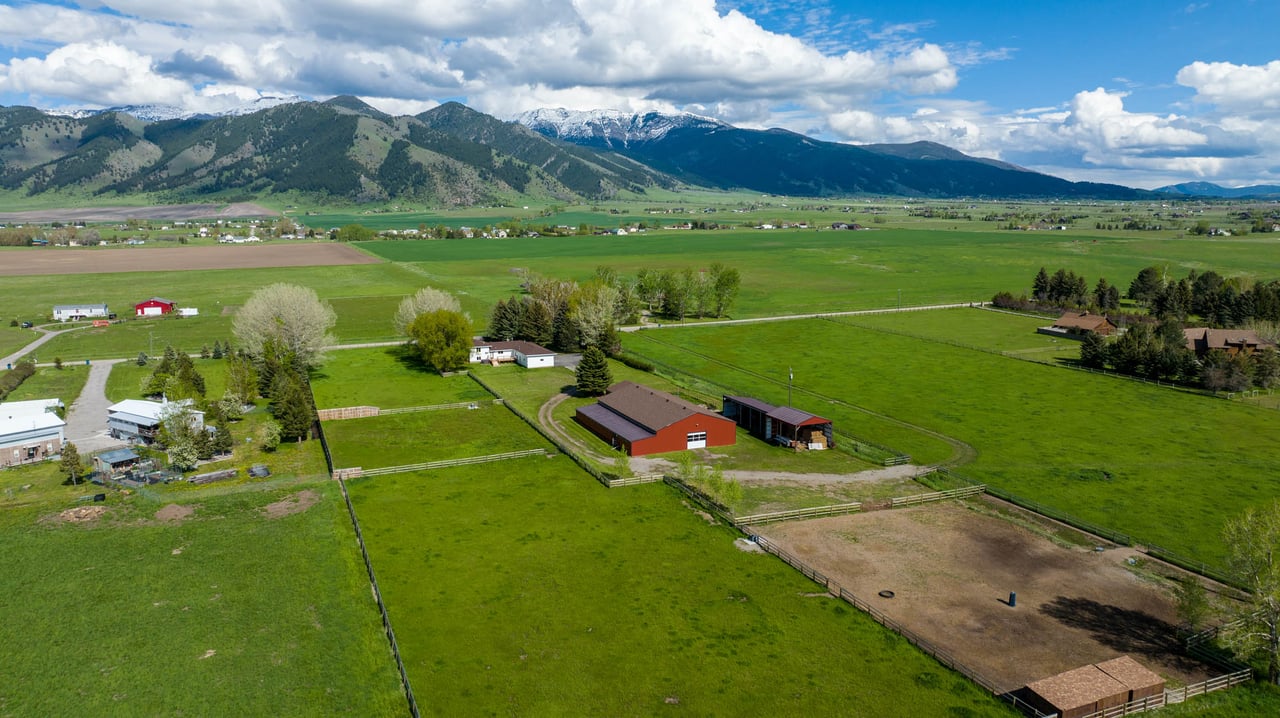
Inside city limits, the water and wastewater lines on the disclosure form are usually a single check mark each. On acreage in Four Corners, Gallatin Gateway, or the outlying stretches of the valley, they are the transaction.
Section 70-20-502 explicitly names water source, water service, wastewater treatment, well, and septic as disclosure categories the seller must address to the extent of their actual knowledge. A well that produced adequately in April but shows sediment or a struggling pump during a buyer's inspection in July is not a fatal finding on its own. A well that shows those things without any corresponding entry on the disclosure statement is a rescission risk, because the buyer's three-day clock under § 70-20-504 does not close until they receive an accurate statement.
For sellers of properties with private systems, the sequence that closes on time in this market is well-flow test, water quality panel, and a recent septic pump receipt in hand before the disclosure statement is drafted. Buyers writing offers on acreage should assume the inspector will recommend both, and should build the response window into the contract rather than the surprise.
Water rights, meth disclosure, and the paperwork nobody asks about until closing week
Two disclosures that never appear on a national checklist are the ones that most often stall Montana closings in the final week.
Water rights transfer under § 85-2-424 is its own conveyance, separate from the deed. If the property carries a water right and the parties intend for it to transfer, the new owner must file DNRC Form 608 to update state ownership records. Missing that step does not undo the sale, but it creates a title-adjacent problem the buyer discovers months later, and it is the kind of thing an out-of-state relocator relies on their agent to catch at contract, not at closing.
Meth and fentanyl contamination disclosure under § 75-10-1305 is a state-level obligation to notify buyers if the property was ever operated as a clandestine lab, and to state whether a certified contractor has completed remediation. It is not a common finding on a Bozeman single-family home. It is a common oversight on the seller's disclosure form, and an oversight on a mandatory disclosure is exactly what a buyer's attorney points to when they want to reset a deal.
The sequence that keeps a Bozeman closing on schedule
For sellers, the order in which paperwork moves is now the closing-date lever. A workable sequence looks like this:
- Pre-listing radon test and, if elevated, mitigation completed and documented.
- Post-winter roof and attic walk-through with photographs of eaves, valleys, and insulation depth.
- For acreage, well flow and water quality tests plus a current septic pump receipt.
- Draft the § 70-20-502 statement against those documents, not from memory.
- Deliver the disclosure statement to the buyer at or before contract execution, so the three-day rescission window under § 70-20-504 runs concurrently with the inspection period rather than after it.
For buyers, the mirror image holds. Ask for the disclosure statement before you write, not after, because your three-day clock starts when you receive it and every day it starts earlier is a day of leverage you keep.
FAQ
Does Montana still let sellers list a home "as-is" without a disclosure statement? "As-is" language governs whether the seller will make repairs. It does not waive the § 70-20-502 disclosure obligation for residential real property. The statute lists specific exempt transfers at § 70-20-503, including court-ordered transfers, foreclosure sales, and spousal transfers under a decree of dissolution, and it allows a buyer to waive the disclosure in writing inside the contract. A private residential sale between unrelated parties is not exempt.
If a Bozeman home tests above 4.0 pCi/L for radon, who pays for mitigation? That is a negotiation, not a rule. EPA and Montana DEQ guidance is that a result at or above 4.0 pCi/L should be addressed in the transaction. In a market with 43-day median list times, sellers who pre-mitigate typically avoid a mid-contract price adjustment, and buyers who inherit a home with a permitted, working sub-slab system inherit a resolved condition rather than a project.
Does the three-day rescission window run alongside the inspection period, or after it? It starts when the buyer receives the disclosure statement. If the seller delivers the statement before or at contract execution, the three days overlap with the beginning of the inspection period. If the seller delivers it later, the three days run from that later date and can push closing outside the negotiated timeline.
Selling a home in Bozeman this cycle rewards preparation more than aggressive pricing, and buying rewards patience more than speed. If you want a paperwork sequence and a marketing plan built around the closing calendar that actually applies in 2026, Everdawn Charles would be glad to walk through the specifics of your property or your search. Discover Montana Living. Contact Everdawn.